
Science isn’t just for classrooms or laboratories; it can spark curiosity right at home. Engaging in science experiments at home not only fuels a love for learning but also provides an opportunity for hands-on exploration. Whether it’s a simple baking soda volcano or a homemade lava lamp, these activities can turn any living room into a mini-laboratory.
Families can bond over these experiments, creating memorable moments while uncovering the wonders of the scientific world. With everyday materials and a little creativity, anyone can dive into the fascinating realm of science. This article will explore a variety of easy and fun experiments that anyone can try at home, making science accessible and enjoyable for all ages.
Benefits Of Science Experiments At Home
Engaging in science experiments at home offers various advantages that enhance learning and foster curiosity.
- Encourages Critical Thinking
Performing experiments promotes problem-solving skills. Participants analyze results and draw conclusions, enhancing their reasoning abilities.
- Sparks Creativity
Experimenting with household materials fosters innovation. Individuals create unique projects, encouraging creativity and exploration of new ideas.
- Strengthens Family Bonds
Collaborating on science experiments strengthens familial relationships. Families work together, communicate, and share experiences, creating lasting memories.
- Builds Confidence
Successfully conducting experiments boosts self-esteem. Achieving goals in science activities empowers individuals, fostering a positive attitude toward learning.
- Promotes Responsibility
Managing materials and following instructions instills a sense of responsibility. Participants learn to respect scientific processes and the importance of accurate results.
- Enhances Understanding of Scientific Principles
Home experiments solidify comprehension of fundamental concepts. Individuals connect theory with practice, deepening their understanding of scientific principles.
- Makes Learning Fun
Science experiments transform learning from a chore into an enjoyable activity. Participants explore concepts in a hands-on manner, making education engaging and entertaining.
- Utilizes Everyday Materials
Conducting experiments at home requires minimal supplies. Everyday items, such as vinegar and baking soda, serve as excellent resources, making science accessible.
Easy Science Experiments For Kids
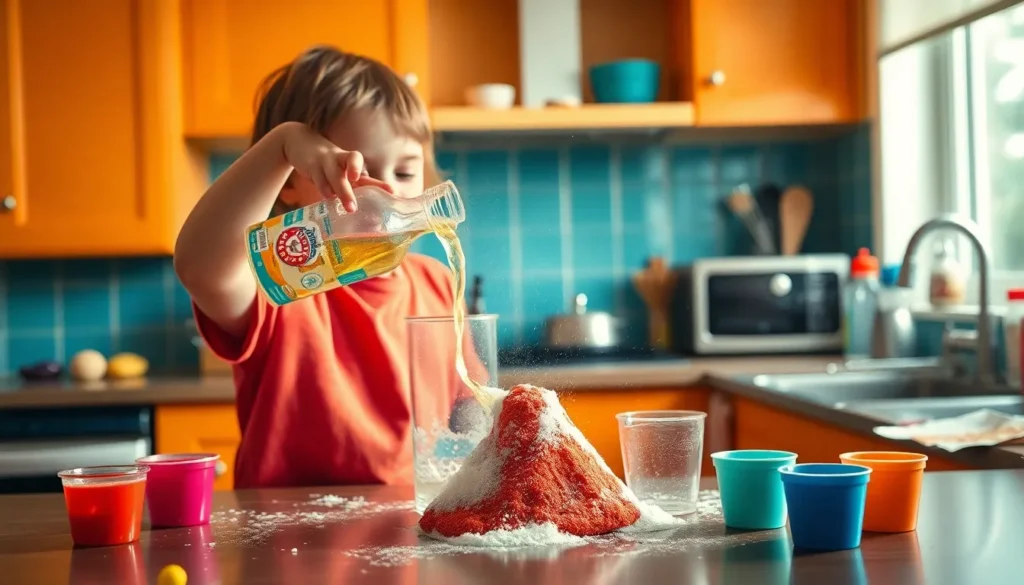
Engaging in science experiments at home offers an exciting opportunity for kids to learn through hands-on activities. The following experiments utilize simple materials and clear instructions, making them accessible and enjoyable for all.
Simple Materials You Can Use
Conducting experiments at home requires only common household items. Here are some essential materials:
- Baking soda: Used in many reactions, particularly with acids.
- Vinegar: An excellent acid for creating fizzing reactions.
- Food coloring: Adds vibrant colors to experiments like homemade lava lamps.
- Plastic cups: Useful for mixing and observing reactions.
- Water: A versatile medium for various experiments.
- Oil: Essential for creating emulsions and layering effects.
- Cornstarch: Useful for making intriguing non-Newtonian fluids.
Step-by-Step Guides
These simple experiments promote learning and enjoyment. Here are two easy-to-follow guides:
1. Baking Soda Volcano
- Gather a plastic cup, baking soda, vinegar, and food coloring.
- Fill the plastic cup halfway with baking soda.
- Add a few drops of food coloring to the baking soda.
- Slowly pour vinegar into the cup and watch the eruption.
2. Homemade Lava Lamp
- Collect a clear plastic bottle, water, vegetable oil, food coloring, and Alka-Seltzer tablets.
- Fill the bottle two-thirds with vegetable oil.
- Add water until the bottle is nearly full.
- Add 10 drops of food coloring.
- Break an Alka-Seltzer tablet into pieces and drop them into the bottle, observing the bubbling effect.
These experiments utilize everyday items while teaching fundamental scientific concepts, making learning fun and accessible at home.
Fun Science Projects For Teens
Teens can explore science through engaging projects that inspire creativity and collaboration. Below are exciting ideas to stimulate their curiosity and foster a deeper understanding of scientific concepts.
Creative Experiment Ideas
- Homemade Slime: Teens can mix glue, baking soda, and contact lens solution to create slime. Adding food coloring or glitter enhances aesthetics, demonstrating polymer science.
- Invisible Ink: Teens can use lemon juice as ink and apply heat to reveal hidden messages. This experiment illustrates acid-base reactions and the principles of oxidation.
- Crystal Growth: Teens can dissolve sugar or salt in hot water and let it cool to form crystals. Observing crystal structure teaches about solubility and saturation.
- Egg in a Bottle: Teens can heat a hard-boiled egg, then place it on a bottle’s opening. As the egg gets sucked in, this experiment showcases air pressure and temperature changes.
- DIY pH Indicator: Teens can use red cabbage to create a natural pH indicator. By testing various household substances, they learn about acidity and alkalinity.
Team Challenges
- Egg Drop Challenge: Teams design a protective case for an egg to survive a fall from a height. This encourages engineering skills and an understanding of physics.
- Bridge Building: Teams compete to build the most robust bridge using straws or popsicle sticks. They apply principles of tension, compression, and design optimization.
- Paper Airplane Competition: Teams design and test airplanes for distance and accuracy, learning about aerodynamics and flight mechanics in the process.
- Solar Oven Design: Teams create solar ovens from cardboard boxes and aluminum foil. This activity demonstrates energy transfer and sustainable energy principles.
- Water Filtration: Teams construct a water filter using gravel, sand, and activated charcoal. This challenge expands understanding of environmental science and purification techniques.
Safety Tips For Home Experiments
Safety plays a crucial role in conducting science experiments at home. Following these tips ensures a secure environment for all participants during the activities.
- Supervise Young Children: Always supervise children when they conduct experiments. Active adult supervision safeguards against potential hazards and ensures safe practices.
- Use Protective Gear: Wear safety goggles, gloves, and aprons to protect skin and eyes from spills or splashes. Proper gear minimizes the risk of injuries during experiments.
- Handle Chemicals Carefully: Store chemicals in labeled containers, and keep them out of reach of children. Proper labeling prevents accidental use of hazardous substances.
- Follow Instructions: Adhere to guidelines provided with experiments. Following instructions accurately reduces the likelihood of dangerous outcomes.
- Maintain a Clean Workspace: Keep the experiment area clean and organized. A tidy workspace prevents accidents and makes it easier to find materials.
- Dispose of Waste Properly: Dispose of chemical waste as recommended. Responsible disposal protects the environment and reduces safety risks.
- Conduct Experiments in Well-Ventilated Areas: Ensure proper ventilation when working with chemicals or substances that may produce fumes. Good airflow helps avoid inhalation of harmful vapors.
- Avoid Food and Drink in Experiment Areas: Keep food and drink separate from the experiment space. This practice avoids contamination and promotes safety.
- Stay Informed: Research materials and methods before starting an experiment. Being informed allows participants to anticipate risks and take precautions.
These safety measures matter in making science experiments both enjoyable and secure. Following these tips ensures a positive experience while fostering a love for scientific exploration.
Engaging in science experiments at home opens up a world of discovery and fun. Families can bond while exploring scientific concepts using simple materials found around the house. These activities not only spark curiosity but also foster essential skills like critical thinking and creativity.
With a variety of projects available for all age groups, everyone can participate in the excitement of hands-on learning. By prioritizing safety and following guidelines, participants can ensure a secure environment for exploration. Home science experiments make learning an enjoyable adventure that can inspire a lifelong passion for science.